Still unsure? Contact us directly – we reply same day.
Window insect screens may reduce light transmission by approximately 20-30%, but in most rooms this is barely noticeable. For example, Transpatec mesh offers excellent transparency of up to 80% and allows almost unobstructed light flow, making the screen visually nearly invisible from both sides.
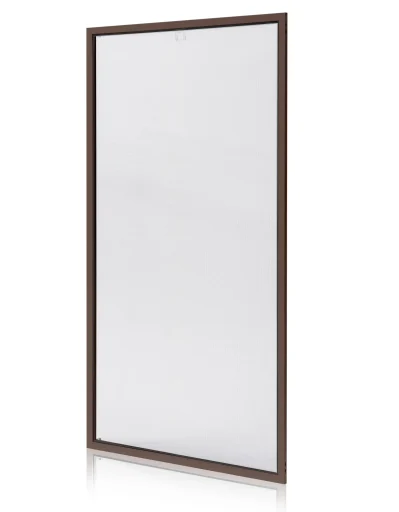
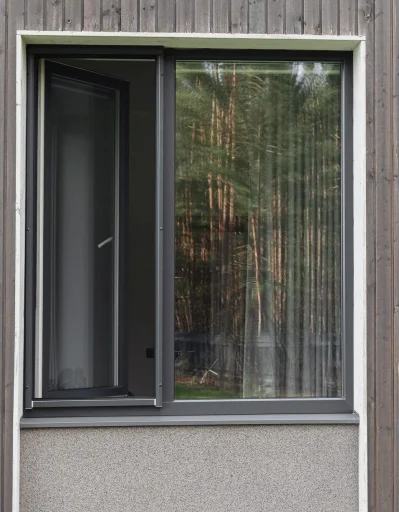
We manufacture custom-made insect screens for various window types, including wooden windows with aluminium cladding, uPVC windows, and aluminium windows (please note: a minimum clearance of 5 mm between the opening sash and the window profile is required). Our screens are suitable for inward-opening, outward-opening, and tilt windows. Each screen is made to measure to ensure a precise fit to your specific window frame.
Yes, framed insect screens work well with tilt-and-turn windows when installed on the outer frame. Alternatively, roller blind screens can be mounted above the window to cover it when needed. Measure the frame opening carefully to ensure proper fit when the window tilts inward.
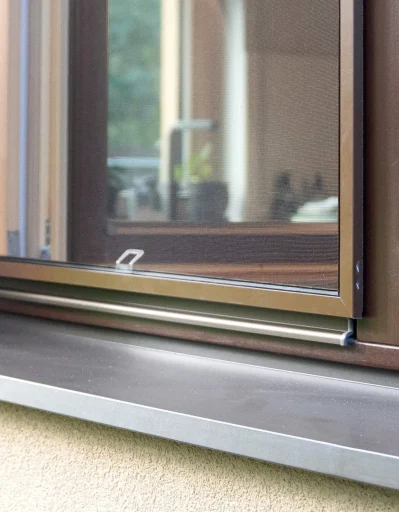
Yes, our framed insect screens with hook mounting are designed for wooden windows with aluminium cladding (see the product page for compatible wooden window types). We also offer roller insect screens, where the profile can be mounted within the window reveal or fixed to the wooden structure using screws or, depending on the selected mounting option, with high-adhesion adhesive tape applied to a smooth and clean window frame surface. Please ensure that the wooden frame is in good technical condition (not rotten or crumbling) to guarantee a secure and stable installation.
Yes, insect screens are also suitable for uPVC windows. Framed insect screens can be installed by hooking them onto the window frame using stainless steel mounting hooks. We also offer roller insect screens, where the profile can be mounted within the window reveal or fixed to the window frame with screws or, depending on the selected mounting option, with high-adhesion adhesive tape. To ensure a precise fit, carefully measure the uPVC window opening.
Yes, aluminium window frames are compatible with insect screens. If the clearance between the opening sash and the window profile is at least 5 mm, a framed insect screen can be securely hooked onto the frame. We also offer roller insect screens, where the profile can be fixed to the window frame structure or within the window reveal using screws or, depending on the selected mounting option, with high-adhesion adhesive tape applied to a smooth and clean window frame surface.
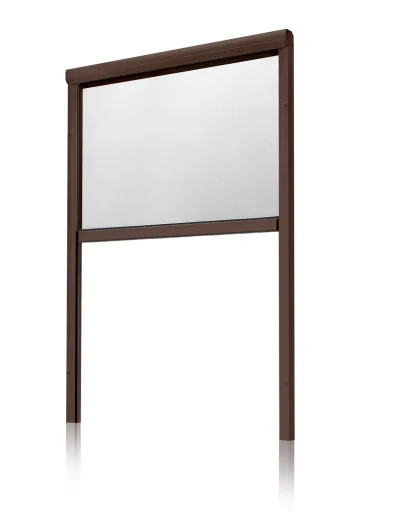
Framed insect screens are suitable for inward-opening windows - the screen frame is securely mounted onto the window frame using hook fixings and provides continuous coverage of the window opening. Roller insect screens are suitable for both inward- and outward-opening windows; when not in use, the mesh retracts into a roller cassette, allowing full access to the window. Framed screens are a simpler and more cost-effective solution, while roller screens are more convenient for windows that are opened and closed frequently.
For bedrooms, roller blind screens are popular because you can retract them in winter or when you want full window access. If you keep the window open all summer, a framed screen is simpler and more affordable. Both block insects equally well.
Yes, we manufacture insect screens for small windows - for example, framed screens starting from 180 × 180 mm. Framed insect screens are especially suitable for small and fixed window openings. For small bathroom windows, proper ventilation is important, so the window can be safely kept open both day and night.
For large window openings, we recommend roller insect screens, which provide convenient operation and full access to the window when not in use. Window screens have size limitations - typically up to 1400 × 2000 mm for framed screens and up to 1700 × 1700 mm for roller screens (depending on the product type). If you have an oversized panoramic window, please contact us at info@insectnets.com to discuss a custom-made solution.
It depends on the screen type. Framed screens are fixed and must be removed to fully open the window. Roller blind screens retract upward, allowing full window access anytime. Choose based on how often you need to open the window.
Measure the window reveal or clear opening (the area where the screen will be installed), preferably in three places for width and three for height. Use the smallest measurement obtained. For accurate results, use a metal tape measure and enter all dimensions in millimeters (mm). Our configurator provides step-by-step guidance, and each product page includes a detailed measuring guide.
If the window frame is significantly uneven or not square (more than a 5 mm difference), please contact us before placing your order - we may be able to slightly adjust the screen construction. For very uneven frames, additional window frame preparation work may be required before installation.
Yes, window screens are designed for DIY installation. Framed screens take 15-20 minutes with a drill and screwdriver. Roller blinds take 30-45 minutes. All necessary hardware and instructions are included. Video guides are available on product pages.
Most window screens require drilling for secure mounting. However, lightweight framed screens can be mounted with strong adhesive tape instead, which is ideal for rental properties or if you can't drill into the frame. Adhesive mounting has size and weight limits.
Insect screens do not need to be removed for the winter season. If you choose to remove them, store the screens in a safe and dry place, laid flat, and make sure they cannot be stepped on or otherwise mechanically damaged. Roller insect screens can remain installed year-round - simply retract them when not in use. Removing screens during winter may help extend their lifespan.
Yes, standard fiberglass mesh (1.41 × 1.58 mm openings) effectively blocks most flying insects, including mosquitoes, flies, wasps, and midges. Very tiny insects such as thrips may occasionally pass through, but the mesh stops more than 95% of common pests. A finer and almost visually invisible option is the Transpatec insect mesh, featuring an ultra-fine structure (approx. 1.27 × 1.43 mm), providing excellent visibility together with effective insect protection.
Window insect screens may reduce light transmission by approximately 20-30%, but in most rooms this is barely noticeable. For example, Transpatec mesh offers excellent transparency of up to 80% and allows almost unobstructed light flow, making the screen visually nearly invisible from both sides.
Yes, from inside looking out, the view is clear. The mesh becomes nearly invisible from 1-2 meters away. From outside, the screen provides some daytime privacy (harder to see in). At night with lights on, visibility from outside increases.
Insect screens are engineered to balance effective insect protection with comfortable airflow. Standard mesh provides reliable ventilation for everyday use, while specialised fabrics - such as pollen-protection or pet-resistant mesh - may slightly reduce airflow due to their denser weave. Premium high-transparency meshes like Transpatec are designed to optimise both airflow and visibility, offering a more open and unobstructed feel compared to conventional insect mesh.
Use a soft brush or vacuum with brush attachment to remove dust. For deeper cleaning, wipe gently with warm soapy water and a soft sponge. Avoid high-pressure washers or abrasive cleaners. Let air dry completely. Clean 2-3 times per year for best results.
Yes, our window screens are made for outdoor use. Aluminum frames are powder-coated to resist rust and corrosion. Fiberglass mesh is UV-resistant and weatherproof. Screens can stay installed year-round, though removing them in winter extends lifespan.
Aluminum frames last 10-15 years or more with proper care. Fiberglass mesh typically lasts 5+ years before showing wear (fading, small holes). Roller mechanisms last 5+ years with regular use. We offer a 2-year warranty on all components.
Contact us by attaching photos and your order details. If the damage occurred during delivery and has been properly recorded in the courier’s delivery documents, or if our inspection confirms a manufacturing defect, we will replace the item free of charge under warranty. If the damage occurred accidentally or due to normal wear and tear after the 2-year period, we offer a mesh replacement service for an additional fee.
Yes, but we strongly recommend upgrading to pet-resistant mesh. Standard fiberglass mesh can tear if cats scratch or climb on it. Pet-resistant mesh is significantly stronger and designed to withstand scratching, though no mesh is 100% indestructible.
Yes, insect screens have smooth edges and non-toxic materials. However, screens are NOT safety barriers-children should never lean on or push against screens. Screens are designed to block insects, not to prevent falls. Always supervise children near open windows.
Window screens start from €60 for small framed screens and go up to €150 - 200 for large roller blinds. Price depends on size, type (framed vs roller), and options like pet-resistant mesh or custom colors. Use our configurator to see exact pricing for your window.
Still unsure? Contact us directly – we reply same day.
Door insect screens reduce airflow by approximately 20-30%, but ventilation remains very good - significantly better than keeping the door closed. Large door openings still provide sufficient air circulation even with an insect screen installed. Pet-resistant or pollen mesh is denser and may reduce airflow slightly more.
We manufacture hinged insect screen doors and sliding (pleated) insect screen doors. These solutions are suitable for house entrance doors, terraces, and balconies, providing convenient use and effective protection against insects. We also offer sliding screen doors for larger openings. If you are interested in this product, please contact us: info@insectnets.com.
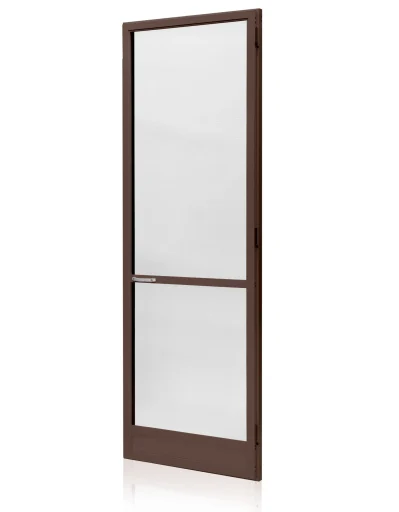
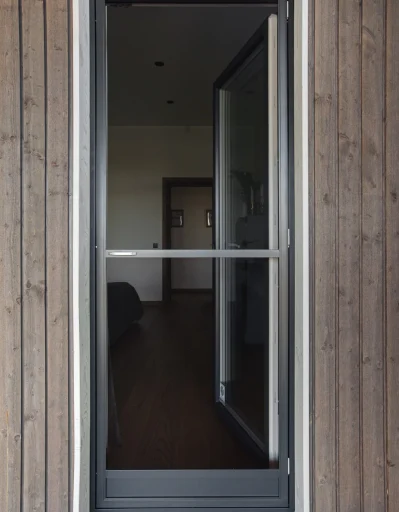
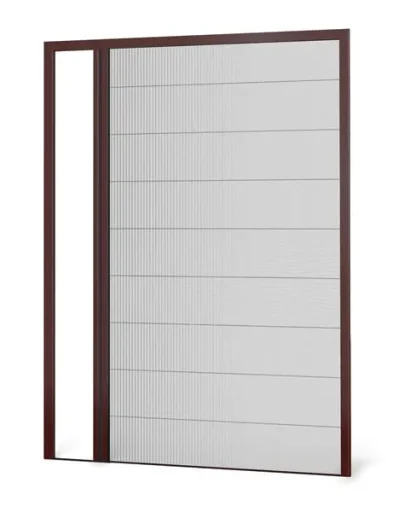
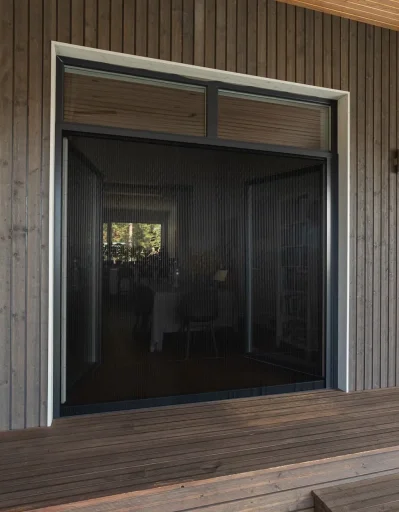
Hinged insect screen doors open like traditional doors - making them ideal for high-traffic entrances and areas where pets frequently pass through. Sliding (pleated) insect screen doors are an excellent choice for larger openings. When not in use, the mesh folds compactly to the side, saving space while keeping the doorway clear. During installation, you can choose the opening direction of the pleated screen - left or right. Hinged screens are more durable for intensive daily use, while sliding insect screens are better suited for occasional use, tighter spaces, or situations where the screen needs to be stored compactly to the side.
Hinged insect screen doors are the most suitable option for pets, as they are sturdy enough for dogs and cats to use (with a bit of training). For extra durability, we recommend choosing pet-resistant mesh in the lower section of the hinged door. Pleated (foldable) screens are less suitable for active pets, as their mechanism is more delicate.
Yes, with hinged insect screen doors and a bit of training, pets (especially dogs) can learn to push them open. Hinged doors are equipped with magnetic closures that help the door close automatically after passing through. Smaller pets or cats may need assistance at first. The magnets keep the door securely closed while still allowing it to be opened easily with gentle pressure.
Yes, with hinged insect screen doors and a bit of training, pets (especially dogs) can learn to push them open. Hinged doors are equipped with magnetic closures that help the door close automatically after passing through. Smaller pets or cats may need assistance at first. The magnets keep the door securely closed while still allowing it to be opened easily with gentle pressure.
We can offer sliding pleated insect screen doors. The maximum dimensions for pleated doors are up to W 2300 mm × H 2300 mm. If you require larger sizes, please contact us to receive a custom quote. In such cases, we can also offer a custom solution - sliding insect screen doors.
In this case, please contact us at info@insectnets.com and send photos of your door along with the measurements, so we can evaluate whether our insect screen solutions can be installed for this type of door.
The maximum order sizes for hinged insect screen doors in the e-shop are up to 1200 mm wide × 2200 mm high. The maximum dimensions for sliding (pleated) insect screens are up to 2300 mm wide × 2300 mm high. If you have a very large opening, please contact us at info@insectnets.com to arrange a custom solution or a multi-panel configuration.
Take the door opening or overall dimension measurements according to the measuring instructions provided on the product page. It is important to ensure that there is enough space around the door for the overall dimensions of the finished insect screen product.
When installing insect screen doors, it is important to consider the overall dimensions of the finished product and ensure that there is enough space on the door frame or within the door opening for proper installation. Also check for any obstacles - such as bulky door handles, hooks, or decorative elements - that may interfere with mounting the screen. Hinged insect screen door dimensions: frame overlap on each side, top, and bottom - 38 mm frame thickness - 16 mm Sliding (pleated) insect screen dimensions: frame width at the top and sides - 45 mm the side cassette thickness (where the mesh retracts) depends on the total screen width.
Yes, door screens are designed for DIY installation. Hinged screens take 30-45 minutes to install with a drill, level, and screwdriver. Foldable screens take 45-60 minutes due to the rail mechanism. All hardware and instructions are included. Installation guides are available on product pages.
Yes, door screens require drilling for secure mounting. The frame or rails must be screwed into the door frame for stability, especially for hinged screens that see frequent use. Adhesive mounting is not recommended for door screens due to their size and usage frequency.
Installation requires drilling, so check with your landlord first. Some landlords approve this as it adds value and prevents insect issues.
Yes, hinged door insect screen systems have self-closing mechanisms (magnetic) that help the door close automatically after you pass through. Sliding (pleated) insect screens must be closed manually - you pull them across the opening and secure them with magnetic closures.
Hinged screens are designed for daily use and last 10+ years with proper care. Choose pet-resistant mesh if the door will be used frequently by pets or children. Foldable screens are better for occasional use - frequent folding/unfolding can wear the mechanism faster (5+ years typical lifespan with heavy use).
Yes, hinged screens are lightweight and easy for children (and adults) to push open. The self-closing mechanism ensures the door closes behind them. Foldable screens require two-handed operation and may be trickier for very young children. Both types have smooth edges and no pinch points.
If a hinged insect screen is left open, it may swing shut in strong wind, but the screen is lightweight and typically does not cause issues. When the door is closed, magnetic closures help keep it securely in place. Foldable (pleated) screens are more wind-resistant because they are secured within tracks.
Yes, from inside looking out, the mesh is nearly invisible and provides a clear view. From outside looking in, the screen offers some daytime privacy. At night with indoor lights on, visibility from outside increases. The mesh allows natural light and maintains good visibility.
Door insect screens reduce airflow by approximately 20–30%, but ventilation remains very good - significantly better than keeping the door closed. Large door openings still provide sufficient air circulation even with an insect screen installed. Pet-resistant or pollen mesh is denser and may reduce airflow slightly more.
Regularly remove dust from hinged insect screen doors using a vacuum cleaner or a soft brush. Perform a deeper cleaning 2-3 times per year using warm soapy water and a soft sponge. Clean sliding (pleated) screens gently when the mesh is fully extended - avoid pulling or stretching the pleated fabric. Allow the mesh to dry completely before retracting it. Do not use high-pressure washers.
Yes, door screens can stay installed all year. Hinged screens simply stay closed in winter. Foldable screens fold compactly aside when not needed. Year-round installation is convenient, though removing screens in winter can extend their lifespan in harsh climates.
Contact us by email info@insectnets.com, with photos and your order details. If the tear is due to a manufacturing defect within 2 years, we'll replace it under warranty. For accidental damage, we offer mesh replacement services for a fee. Pet-resistant mesh is recommended if you have active pets.
We offer several standard frame colours depending on the selected product type. Hinged door screens are available in 5 standard colours: white (RAL 9016), anodized, anthracite (RAL 7016), light brown (RAL 8001), brown (RAL 8014). Pleated door screens are available in 4 colours: white (RAL 9016), anthracite (RAL 7016), brown (RAL 8014), black (RAL 9005). The exact standard colour options for each product are shown in the configurator during the ordering process. If you cannot find your preferred colour, please contact us regarding custom powder coating at info@insectnets.com. Please note that custom colouring increases the product price by approximately 30% and extends the production lead time by 2 - 3 weeks.
Hinged door screens typically cost from € 180 depending on size and options. Foldable (pleated) screens range from € 300 for standard sizes. Price varies with size, mesh type (standard vs pet-resistant), and custom colors. Use our configurator to see exact pricing for your door.
Door screens are designed for residential use. For commercial high-traffic entrances, contact us for heavy-duty options or commercial-grade screens. Standard residential screens may not withstand the wear of 50+ daily uses typical in commercial settings.
Yes, door screens with standard mesh effectively block wasps, bees, hornets, and other large insects. The mesh is strong enough that even aggressive insects cannot push through. Keep the screen door closed for full protection.
 Made in Northern Europe